Inca stonework visited
Ever since I first heard about the Incas at high school in the States I have wanted to see the famous mortar-less stonework in Peru and find out how it was done. One of our guides in Peru last month told me the answer. Big smile, palms up and wide apart, he revealed it to me at last – “It’s a mystery“.
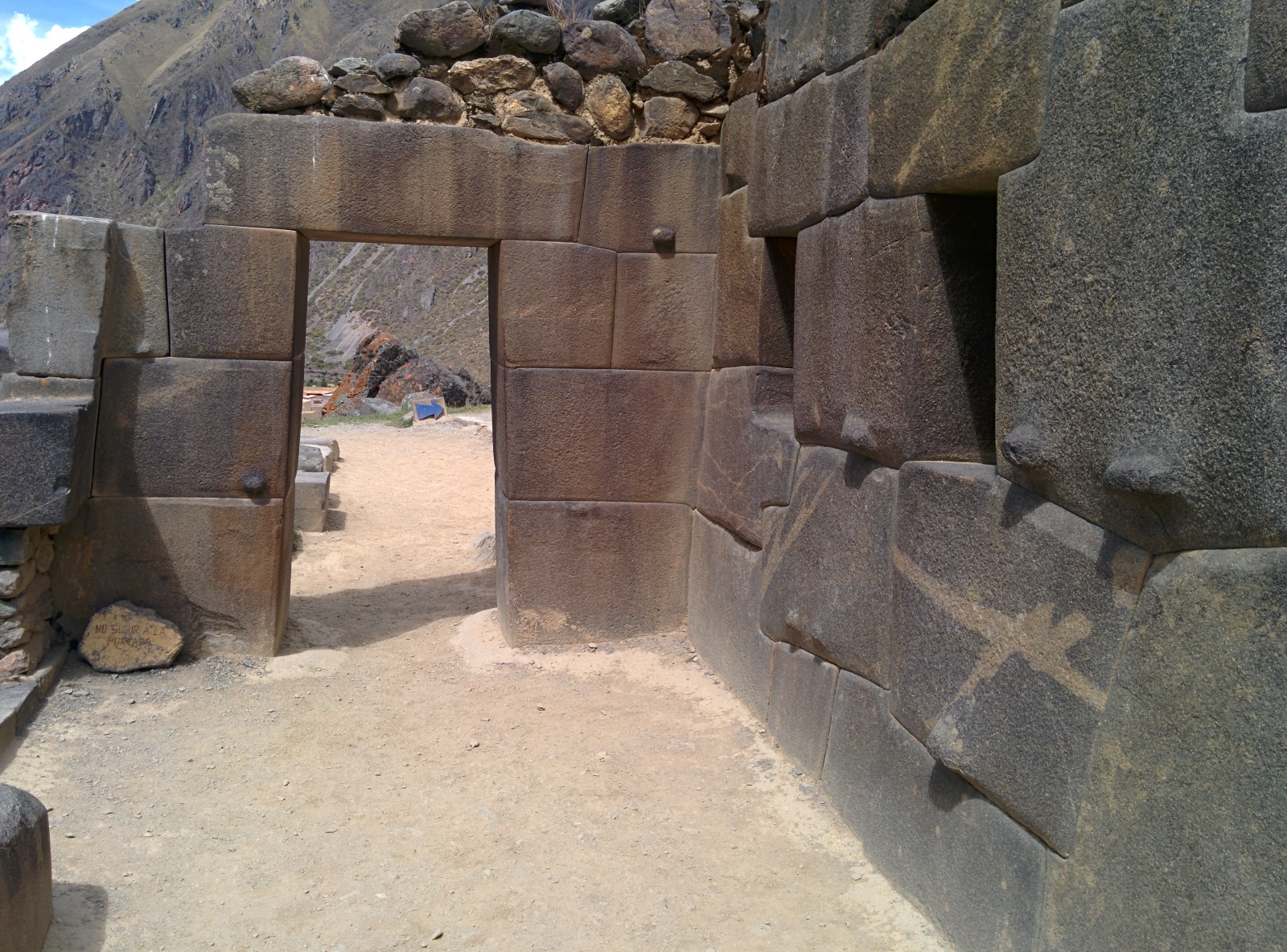
Some mystery. No metals harder than copper (or at least bronze); no wheel; no arch; no writing; no horses, no cattle – just camelids. Primitive ceramics, primitive art. Yet here is masonry without any explanation that I find remotely plausible. Huge stones fitted together. Perfectly, not just at the surface, but in three dimensions. Some of a softish stone, but also some of granite. People kept muttering about “trial and error” but they can’t ever have tried leveling the legs of a chair that way.
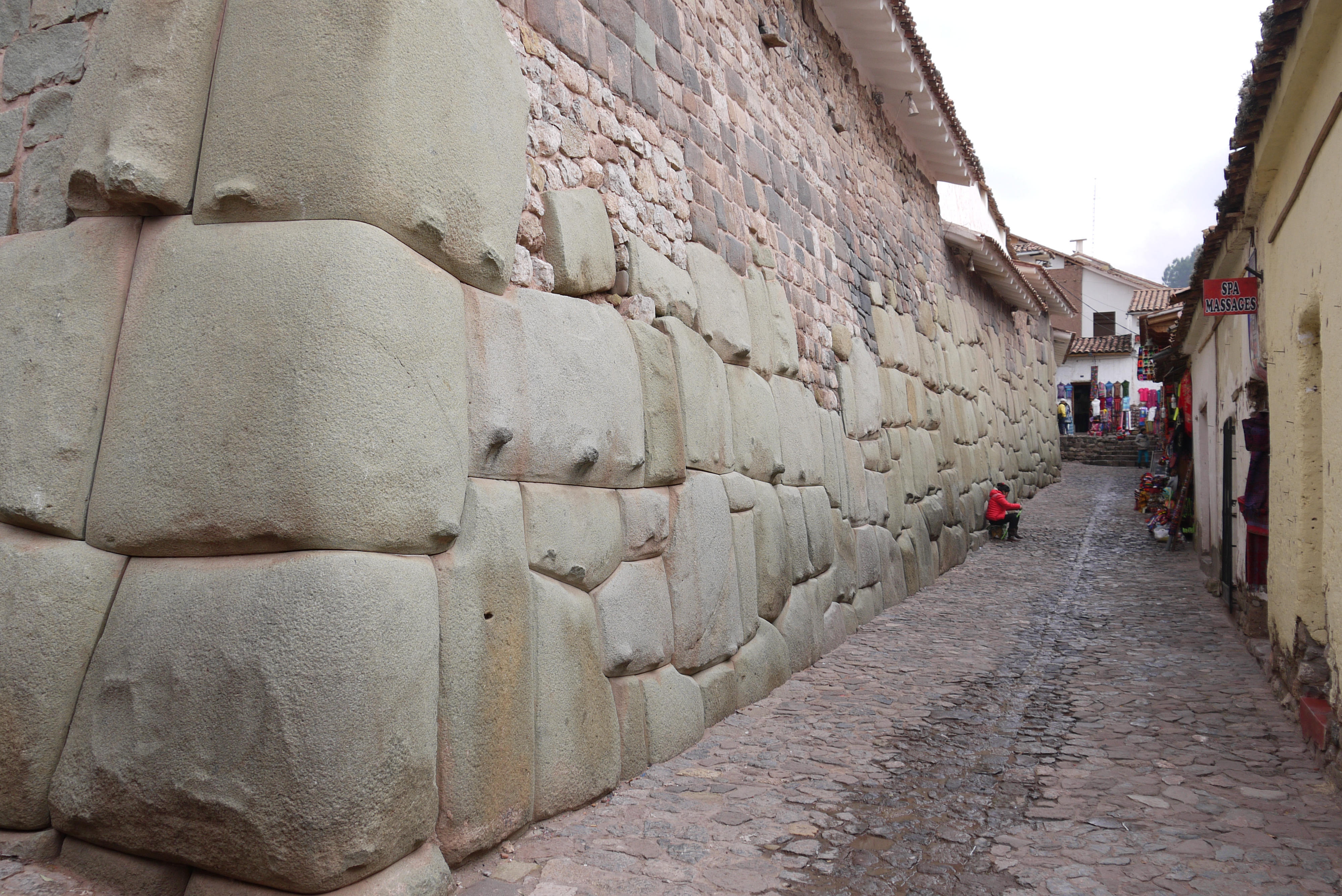
Of course we saw the big, famous places, and as it happens all of my photos of those, apart from the ones I took on my phone, are lost on a faulty memory card. But luckily I filled the doomed card and switched to the one from my wife’s camera for the last few days. And I want to share some pictures taken after that, while we were still in the Sacred Valley of the Incas. I think they illustrate something about this new world masonry which is radically different from the classical architecture with which we are familiar. I mean the way the South American stonework ‘grows’, almost organically, out of the natural bedrock.
I hope this little gallery of pictures will illustrate what I mean:








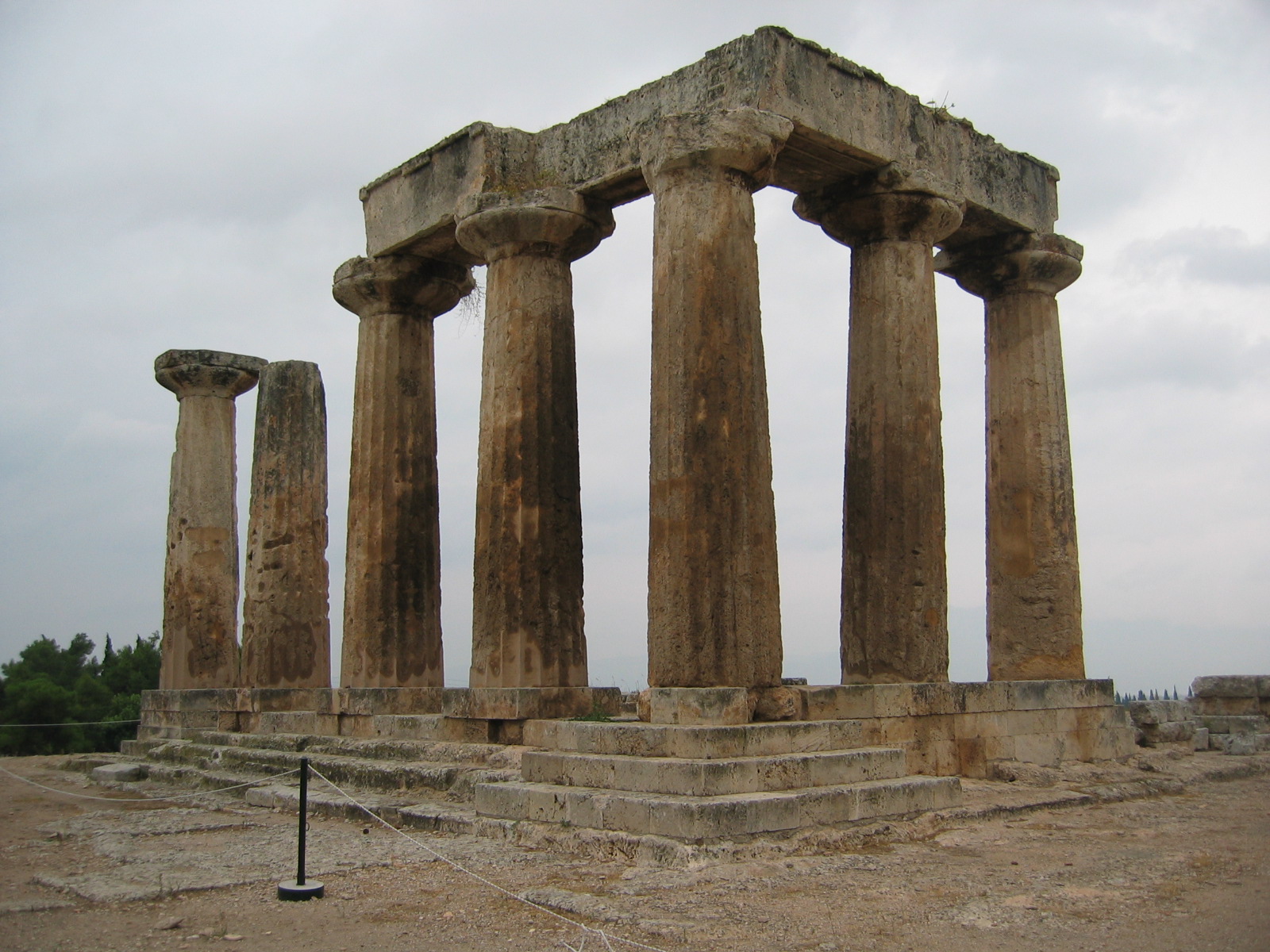
Quite apart from the beauty of the wonderfully interlocking stonework, evolved to withstand earthquakes, the intimate way it is fitted to the underlying rock seems as different as it could possibly be from the formally planned foundations of, say, a Greek temple.
New love affair
It takes time to get your head around having your own solar power.
Our PV roof panels were switched on three days ago and we have already generated (…gets up to look at the meter behind him on the wall…) 57.1 kilowatt hours. That’s much more power than we have used in that time. That’s a lot. Much more than I imagined.
Our system has a little bonus gizmo so that when we are not using all the power we generate (most of the time) the excess is fed automatically into the immersion heater in our hot water cylinder. So we switched off the gas boiler when the PV came on stream and we still have piping hot water for showers each morning. (That means zero energy cost, folks.)
But the thing which is so novel and which takes some really believing is that during the day we can use as much hot water as we like and there is absolutely no cost whatsoever – not to us and not to the planet: we are just using the heat from the sun that would have fallen on that part of the roof anyway.
Wow!
Why isn’t everyone doing this!
Another thing: When the energy performance certificate for our house was done just six months ago the assessor estimated that a 2.5kW solar array would cost future owners (i.e. us) between £9,000 and £14,000. In fact our state-of-the-art array, installed with meticulous care and attention to detail last week, actually cost us £6,500. And it generates 4kW, getting on for twice as much as that estimate, for less than half the price.
Bottom line – even the experts have not understood how quickly solar power is becoming hugely cost effective.
And our bottom line is the profound satisfaction we are getting. We even have a new electric lawnmower, which – wait for it – gets used in summer and always during the day – isn’t that just beautiful.
Our system was generating 1kW at 8.00 this morning and 1.3kW at 6.00 this evening. And it is early April in supposedly dark and dreary England. Isn’t that beautiful too!
Oh yes, it peaked at just over 3kW. Eight panels on the East sloping roof and another eight on the West.
Am I becoming a bore? Not to me. It’s wonderful!
My comparison of the brightness of different kinds of light-bulb.
Two days ago I tweeted a contribution to the upcoming 10:10 forum on LED lighting:
@1010 We have two LED bulbs billed as 60W replacements by Homebase which are much brighter than 100W
When this provoked some interest I added that I had kept meaning to test this impression by using the light meter of my camera. 10:10 replied that they would be interested in the results. So, waiting only for darkness to descend, I went ahead with my simple experiment. Which confirmed my assertion, thus:
Method:
Setup
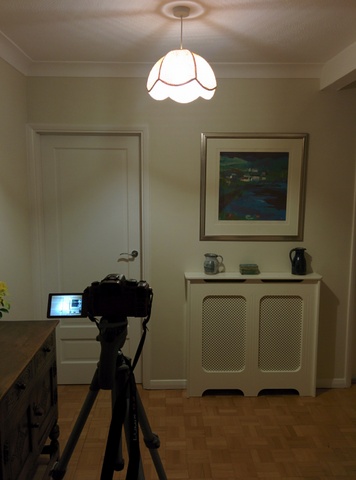 Lumix G2 camera set on Aperture Priority mode. Sensitivity at ASA 1600 Aperture fixed at f3.6
Night time. No other light sources present.
The only change made between each reading was the bulb itself.
The two mini fluorescent examples were allowed to warm up to full intensity before taking their readings.
Results:
- 60 Watt Incandescent: 1/60th second exposure required*
- 100 Watt Incandescent: 1/100th second exposure required*
- 15 Watt mini-fluorescent: 1/100th second exposure required*
- 12 Watt LED: 1/160th second exposure required*
- 30 Watt mini-fluorescent: 1/200th second exposure required*
*The amount of light produced by the bulb is presumably in inverse proportion to the length of the exposure required – i.e. the shorter the exposure the brighter the bulb.
Conclusion:
These results suggest that while the 30W mini-fluorescent is the brightest bulb tested, the 12 Watt LED bulb bought from Homebase produces nearly three times as much light as the 60 Watt incandescent bulb for which it was billed as a replacement, and is more than half as bright again as the 100 Watt example, just as I claimed in my tweet.
Discussion:
One factor inhibiting people from changing over to LED lighting in their homes (apart from the cost – which is falling dramatically) is the belief that you can’t really get an adequate replacement for a standard 100Watt light bulb. Homebase, at least, appears to be contributing to this misconception by underselling the particular LED bulb which I used in this comparison.
I had no means of testing the accuracy of the wattage marked on the different bulbs, but if these are roughly correct then this experiment also supports the commonly repeated claim that LED bulbs use approximately 1/10th the electricity for the same light output.
I can feel further blogs coming on re:
- The emerging practicality of large-scale changeover to much more efficient means of domestic lighting
- The enduring validity of amateur experimentation, even in cutting-edge areas.
But I dont want to “blog faster than ever”
Thank you WordPress for your latest email, but I don’t really want to ‘blog faster than ever’. I am using this facility now, but basically I think there is such a vast ocean of material on the web that quality is much more important than quantity. Am I alone in thinking that if you expect people to take the time to read what you say you should pay them the compliment of writing it as carefully as you can?
Some things flow well off the top of your head, but much more often you have to work and rephrase, review after an interval, and so on and so on, until it is something worth other people reading.
This is one of those ‘off the top of your head’ pieces. For better or for worse.
A ray of light in the Isles of Orkney
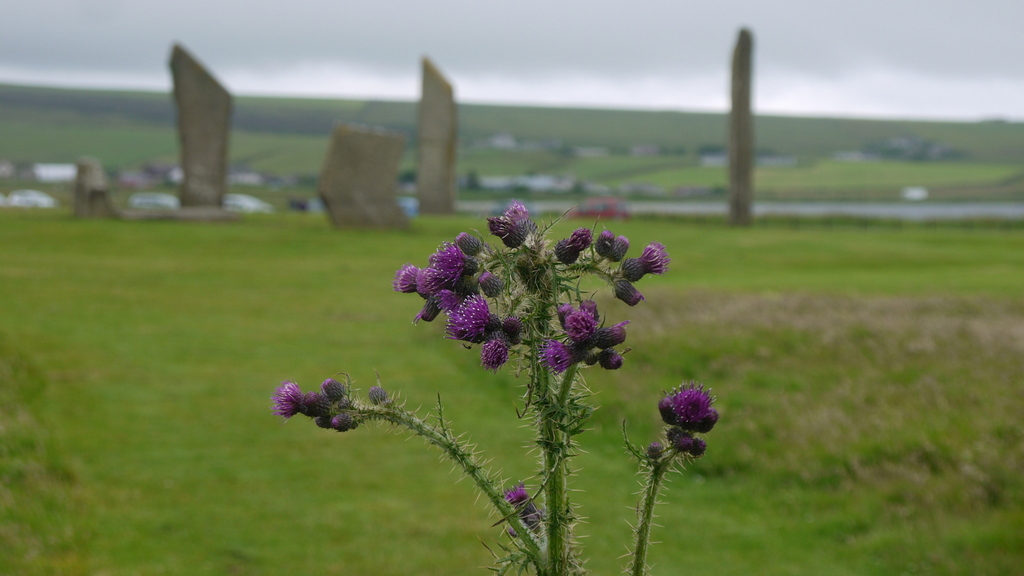 The Stones of Stenness, Orkney
Visiting Orkney – the islands just off John O’ Goats at the northern tip of Scotland – a few days ago, we were entranced, as every visitor is, by the 5,000 year old archeological sites. Older than most of the pyramids, twice as old as Homer and ancient Greece, these stone structures that you walk around all over the place are evidence of a society of amazing sophistication.
One of the most notable features of the surviving artifacts is that, like Stonehenge 700 miles to the south (much nearer home for us) some of them are lined up accurately with the solar solstices. Stonehenge is aligned with the summer solstice, the longest day of the year, but it is on the shortest that the sun shines right down the length of the entrance tunnel of Maeshowe in Orkney so that it illuminates the opposite wall of the chamber deep inside the mound.
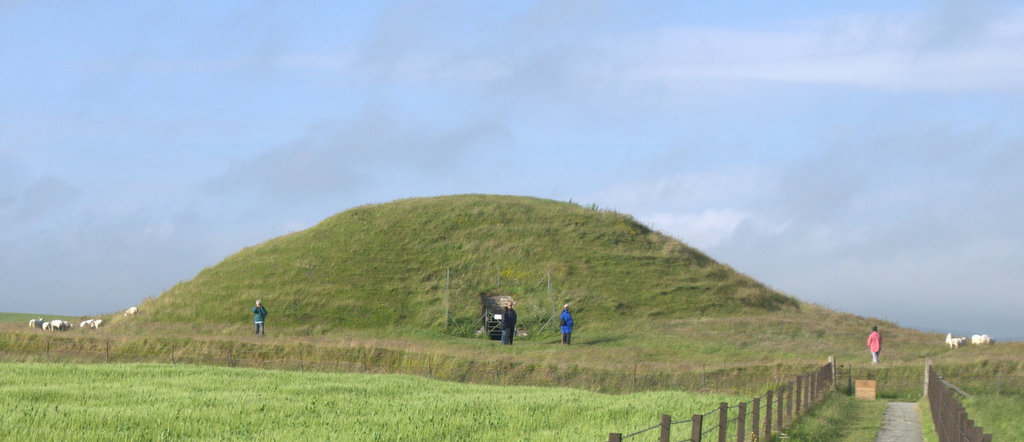 Maeshowe. Entrance only by guided tour, and photography inside not allowed
The natural thing is to be amazed at the cleverness of people who could work out this sort of thing and line up their buildings accordingly. But I suddenly had a flash of insight into how it might actually be done which I would like to try out here. I don’t for a moment imagine the idea is original, but it was certainly new to me, and it has interested a few people I have described it to. So here goes:
By far the most important variable in the life of people living in far Northern latitudes (and also for anyone living in far Southern latitudes if there were any) is the extreme variation in day length that occurs with the seasons. In tropical latitudes, of course, the day length is unchanged throughout the year, but in Orkney last week it was still light at 11pm and in the depth of winter the opposite must apply, making it dark for all but a few hours of each day.
So, imagine some Orkadian Einstein hitting on the idea of sticking a marker in the ground to line up something like a distant tree with the point on the horizon where the sun is setting. The next day (s)he finds that the marker has to be moved a little to the left, and again the next day. And so on, day after day. But sooner or later there comes a point where the movement stops and the markers begin to move back. That point is obviously going to be significant. So he sticks a bigger and more permanent marker there.
That would be interesting enough merely as a sign that the worst is past and from now on the days will get longer, but imagine if our proto-Einstein then leaves his/her markers until the following year and finds that the sun turns the corner in exactly the same place that year as well, And then the next year. And then the next. Surely the significance of this alignment with the horizon would be far greater, and far more god-like, to someone who had no understanding of how or why it happened that way, than to people like us to whom the explanation is commonplace.
Looking at it like that I felt I had some understanding of why people living in those conditions, particularly those in Northern latitudes, would have placed such enormous significance on these alignments in their traditions and in their ceremonies. But at the same time I could also see that setting up the precise alignment would be a much simpler process than I had previously thought. Contrary to what I had always supposed it could be entirety empirical and done without the slightest understanding and without the need for any calculation or astronomy whatsoever. You just put in bigger stones to mark your alignment and build your temple, or whatever, round them.
On the other hand, the fact that the alignment still holds true 5,000 years later does still strike me as awe-inspiring and slightly god-like.
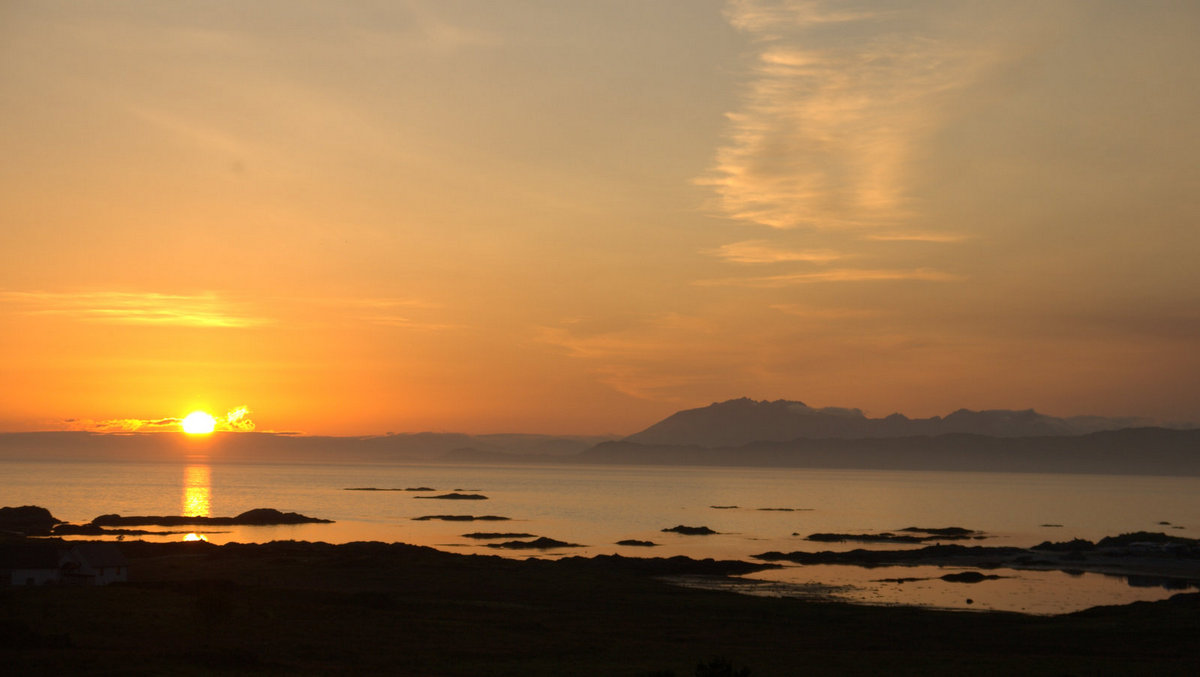
Sunset over the sea to Skye – and the Cuillin mountains
 Generally Speaking