Global Warning Denial – get them to put a figure on it.
Somebody said, ‘Our neighbour’s son is a global warming denier’.
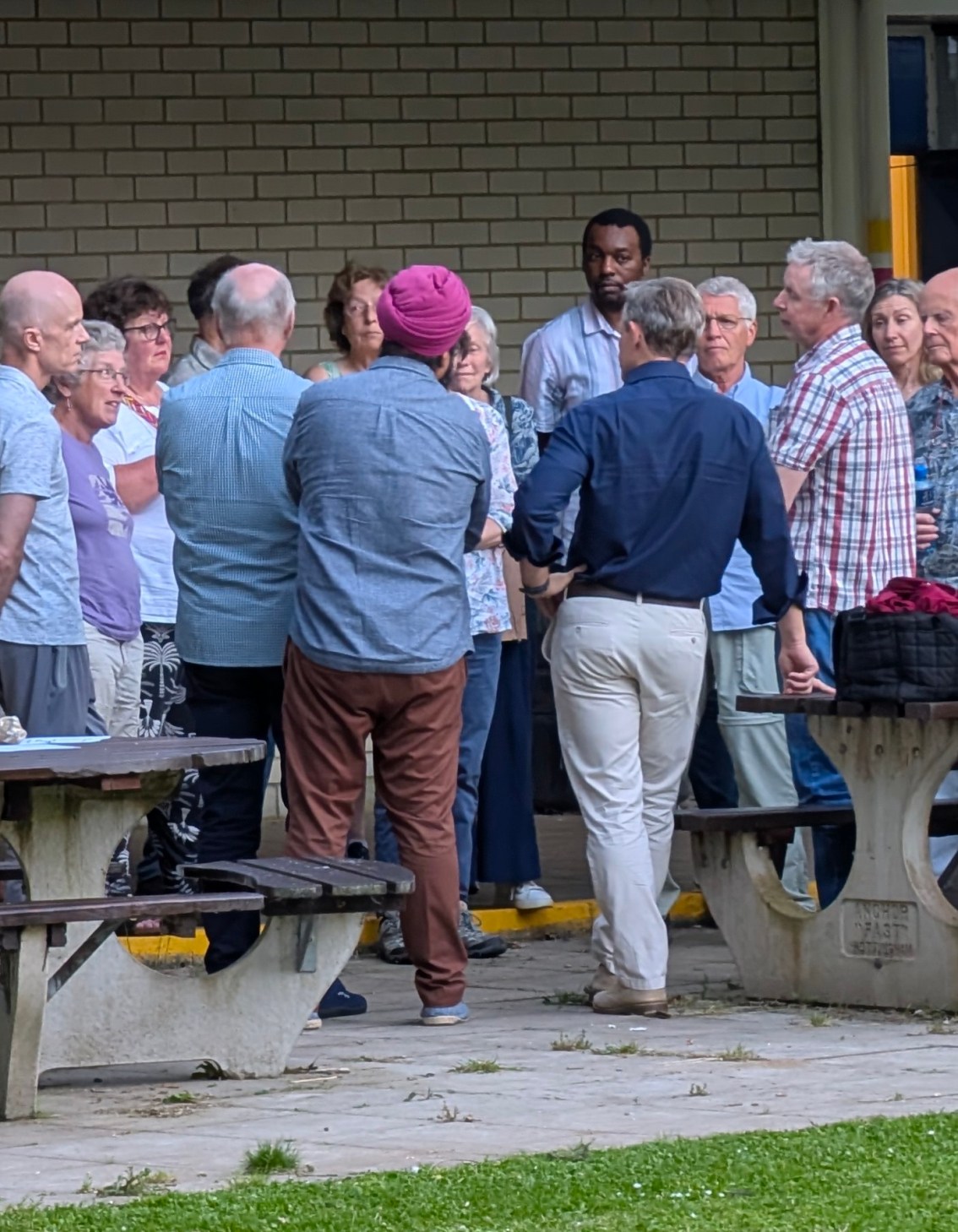
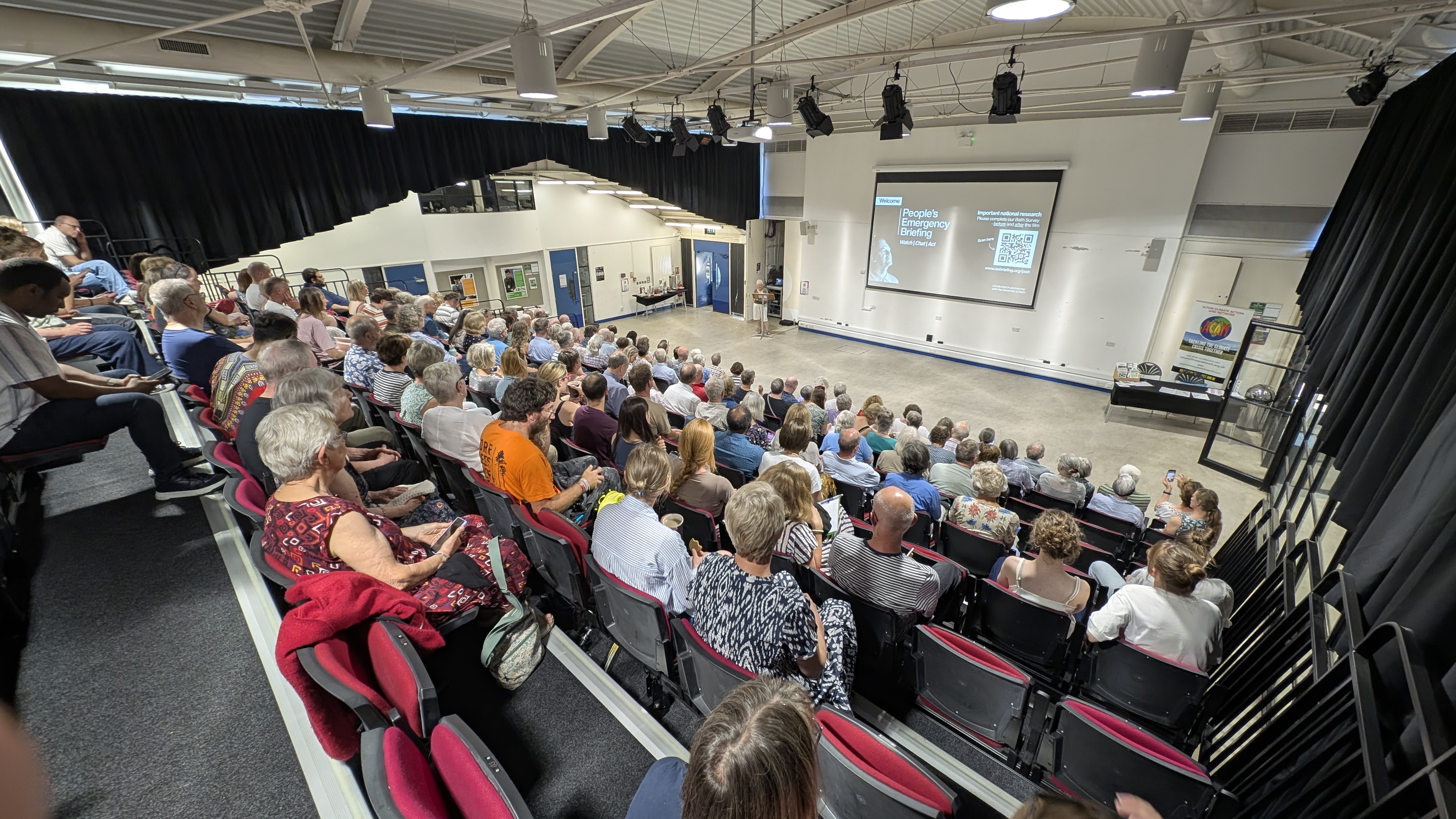
It was towards the end of a People’s Emergency Briefing on Climate and Nature, held last week at our local College. One of more than a thousand showings all over Britain of the Chris Packham-presented film since its launch little more than a month ago. This one had been organised by Alton Climate Action Network (ACAN) and it had attracted the largest attendance in the group’s seven year existence. A high proportion of the faces were new. Lots of concerned people turned up. My job was to take a few pictures with my ‘phone.
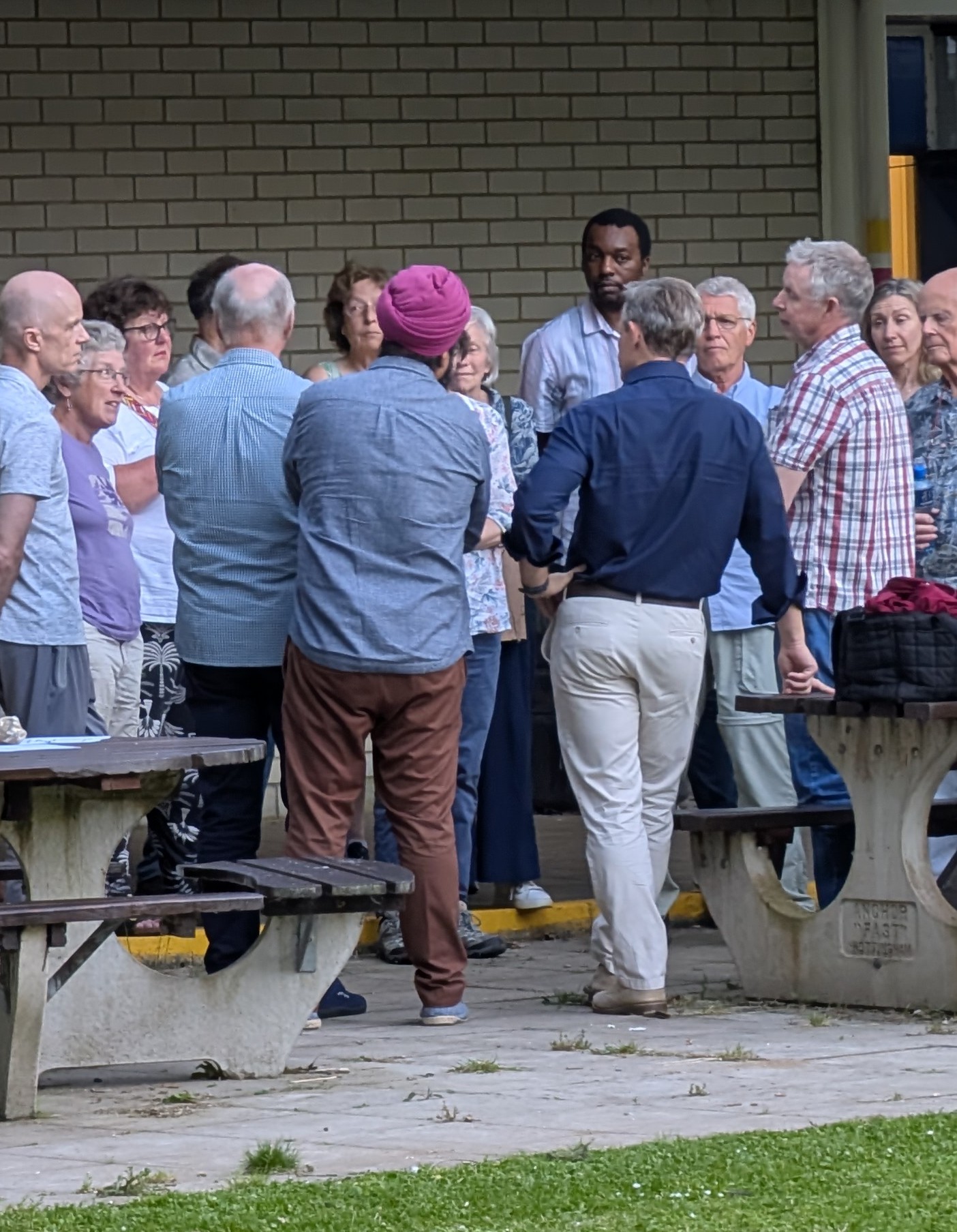
Break-out groups after the showing produced excellent suggestions for ethical living and climate-friendly actions of all kinds. But this was a gathering of the converted.
My contribution, born of more than two decades of fruitless effort in the field, was to say that the elephant in the room was Denial, and until we found an answer to that, the rest was… well, choose your analogy… deckchairs, Titanic, windows, dressing…
‘Talk about it’ was one of the key things that everyone had just agreed we should do. So, what on earth can anyone say to that denier – the neighbour’s son?
Here is an answer which has worked for me:
Get them to put a figure on it…
Just ask the denier how certain they are that they are right, and that the overwhelming consensus of scientific opinion is wrong? Or, how certain they are that climate science is a hoax? Or whatever it is they are claiming to believe.
Go on, try it – get them to put a figure on it. Are they 80% certain, or is it 90%? Perhaps they are 95% certain? If they say they are 100% certain then you’ve won straight away because of course nothing is certain in science. So they probably won’t say that.
Imagine you get them to say they are ‘95% certain’, then you turn the figure round: ‘So there’s a 5% chance that you are wrong and that an unprecedented global catastrophe is imminent. And you really think it is wrong for humanity to try to protect itself from that threat?’
Remind them that we regularly take actions (we call them precautions) against threats that have a vastly smaller likelihood than 5% (or 2%, or whatever it is) For heaven’s sake, we are living in a famously risk-averse society – are they seriously suggesting that we shouldn’t take precautions against the largest potential threat of all?
A while ago I tried this question on some unfortunate denier whom I had chanced upon on social media. I think it was probably a chap, and as I persisted in asking him politely for his figure he became evasive, angry and abusive. Trapped in the absurdity of his position, he flailed around in angry frustration.
I’d won of course, but I don’t suppose there was a Damascene conversion. How wonderful if would have been, on the other hand, if someone in the BBC had tried this argument on arch-denier Nigel Lawson a generation ago, when the climate emergency would have been so much easier to address. Instead of wheeling him on stage, time and time again, to ‘balance’ the informed arguments of some eminent climate scientist. I even remember the BBC giving him the last word for his profoundly ignorant assertions.
Perhaps someone could have asked the BBC about its misplaced policy of ‘balance’, and its certainty that it was doing more good than harm. One can only dream.
Voicebox
In the days when I was a regular columnist in the medical press I chose to write one of my Voicebox columns in the The New Generalist (then the house magazine of the Royal College of General Practitioners) on the subject of Global Warming Denial. It was the summer issue of the year 2005. ‘Haven’t they got grandchildren too?’, I asked. ‘If you are driving along a road and somebody shouts a warning that there is a precipice ahead,’ I continued, ‘surely you would slow down instead of than stepping on the gas and roaring ahead’. Here is the original article [PDF]
More than twenty years later that is almost literally what we are doing – rushing towards the abyss at a faster pace than ever, and failing to take actions remotely commensurate with the urgency of the warnings.
Those warnings were starkly laid out in this People’s Emergency Briefing, The positive thought is that the scale and the reach of this particular nationwide campaign seems to be something new. Perhaps there is real hope that it could push public opinion beyond a tipping point of public perceptions so that the evil vested interests of organised climate denial are exposed for what they are and the fatuity of that neighbour’s son’s denial of the evidence of science is obvious to everyone.

